
On vocation
More angst than ever before!
The single most important thing distracting faithful people from being the church is our culture’s views on jobs and vocation. We get so busy with our jobs that we have little time left over for being the people of God. And much of the problem grows out of the Reformation.
The standard Roman Catholic position in the Middle Ages was that God calls people only to jobs in the church… The Reformers reacted to the Catholic position by saying that since God created the whole universe, all legitimate work is God’s work. Being a farmer or soldier is just as good as being clergy, just as much a calling of God. The only question is whether you’re trying to do God’s will, whether you’re caring for God’s creation. Within this perspective, the work you do can be a primary avenue for serving God and transforming the world.
By contrast, Anabaptists taught that our only calling is to be disciples of Christ in a local church.
John F. Alexander, “Vocation,” in Called to Community: The Life Jesus Wants For His People (Plough Publishing House: 2016). 165-166.
This is an excerpt from a book published by the Bruderhof, a movement of Christian communities that practices radical economics but conservative gender roles. The book is ecumenical in its scope, though, with short chapters from Catholic Workers, evangelical New Monastics, and other communitarians. Some of the pieces are great and others make me cringe. All of them are reflections on Christian intentional community.
In “Vocation,” John F. Alexander emphasizes that no one in scripture is called to a trade or job outside the church. People are called to be apostles, or they are called to greater things like “eternal life.” He explains that for Anabaptists, employment is a means to put food on the table, not the way for people to serve God. If a job is interfering with someone’s ability to be a disciple in their local church, they should get a different job.
It’s a challenge that goes straight to my gut. I have considered myself called to residential community – the “local church” – as both lifestyle and ministry. Holistic. When I was a Catholic Worker, I would’ve agreed with Alexander whole-heartedly. It makes me think of the quote from Dean Spade that I wrote about a while ago. Christianity is a way of life, not a hobby. I believe it, but can I live it? Is it a call I can handle?
My burnout and community trauma have obviously made me question that call, but there’s another complicating dimension: my ministry degree. Part of me wants to use my degree in a more traditional context to serve the local church. There’s a bitterness in my conflicted longing for the affirmation and structure of a church career.
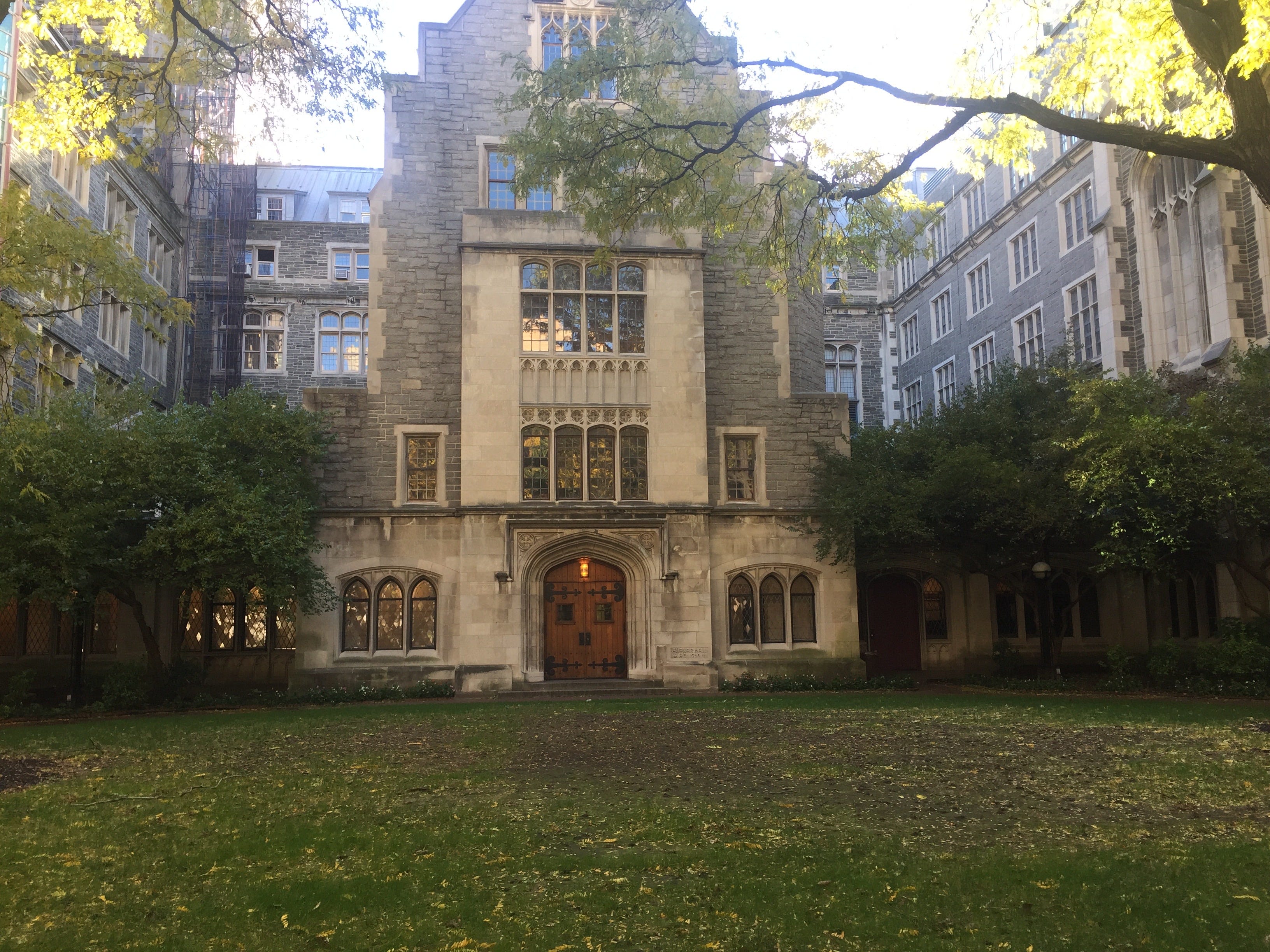
A few years ago, while visiting friends at my old seminary (Union), I asked after our classmates, curious about what everyone has done with their degrees. Here are some of the answers:
Part-time contract work - few hours, no health care
Part-time contract work, thinking about another masters degree
Full-time Catholic Worker, plus part-time contract work
More CPE (Clinical Pastoral Education - an unpaid or low-paid internship as a chaplain, most often in a hospital)
Back to pre-seminary work, like teaching in a non-religious elementary school
Burnt out of teaching at an elite religious high school, now working at a library
Still working on a PhD
Entry-level ministry jobs that don’t require a graduate degree (like me)
Granted, this is not an all-inclusive list. Some former classmates have been ordained and become full-time pastors. Several hold part-time youth ministry positions. And I have one friend who’s a full-time professor of theology! But I know more alumni who do the sort of part-time, cobbled-together, less-glamorous work that doesn’t end up on social media. Many are members of denominations that will not ordain them – or they don’t fit into any denominational or religious box. Many are Catholic, like me. Perhaps some of my former classmates find themselves fulfilled by the part-time work that allows them to serve the local church. But I know that some are less satisfied.
I went to seminary to make church my life. I even went into debt for seminary: Though I received a full-tuition scholarship, I took out loans to live in New York City. And I was terribly naive. I knew it would be hard to make money as a Catholic woman in ministry – especially as a Catholic woman in ministry who publicly dissents from church teaching! – but in 2017, when I was fresh out of college, that felt abstract and far away. Besides, did I even want to make money? The voluntary poverty of the Catholic Worker tugged at me. At that time, I only knew that I wanted to love God, find community, and love God in community. I believed that after finishing my MDiv, I would find a way. I thought I’d find paths toward professional success and authentic Christian living. And while I’ve found bits and pieces along the way, it’s been harder than I could’ve imagined.
Do I think Union should provide more disclaimers? (“Don’t come here if you’re not on an ordination track! Do you realize how few jobs are out there? What are the prospects for a 20-something with a bunch of liberation theology knowledge?”) No. Union is struggling – more than some seminaries, less than others. It needs students. And the world needs people – flawed and chaotic as they may be – to study God who is Love and Liberation.
But envy is one of my top sins. This makes perfect sense because I’m a 4 on the enneagram, and 4s tend to be moody, dissatisfied, and self-absorbed. Sometimes I indulge myself. I feel envious when I see my ordained peers assigned to churches, and I feel especially envious toward the charming white heterosexual men who get to serve prominent congregations and show up to protests wearing their clerical collars… especially when I know how they were playing multiple women and breaking hearts back in the day. Do they have to be so conspicuous, pleased with themselves, self-righteous? Why do they get called – by community, to community? Why do they get a vocation that checks all the boxes from John F. Alexander’s articulation of Christian vocation?
Something especially painful is the realization that some of my old heroes were just like those guys when they were younger. I don’t mean that they were heartbreakers – I have no data on that – but I now suspect that some of the clergy I admired were the kind of young guys I’d now find insufferable. I went to seminary in large part because I admired men who spoke prophetically – but they later let me down. The church is a human community with its own failings, and I didn’t fully understand this when I started seminary. The same is true for alternative Christian communities. The truth is not just a realization about human foibles; it’s about cruelty, dysfunction, and ego. How can I bear any of it?
At this point, I surely sound bitter. These days, my bitterness is emerging more and more. I wish I’d chosen an easier path, or that I didn’t let myself feel so disappointed. To give myself more grace, though, the trauma is coming up more and more. A housemate just told me that trauma sits in your gut. I’d gone to tell her about my latest community anxieties, my stomach in knots, and before I even shared my physical symptoms, she offered that diagnosis. It’s somatic. Though I’ve mentally processed many of the tense and terrible things that have happened in my quest to serve the local church, my body has not.
As I enter my 30s, I’m entering into grief. I tried to be a Catholic Worker and emerged with crippling anxiety and a longing for a 9-5 job. Now I wish for some holistic hybrid of labor and community that would give me everything all at once. But I don’t have a dream job because I don’t know what I want. More precisely, I want many things, like love, belonging, and meaningful labor. I want to write, rest, take care of animals and plants, organize systems and spreadsheets, travel, offer pastoral care, make art, do physical labor, make people happy, make myself happy… I don’t know. Maybe that’s a calling to the local church, but when I tried to live out a calling to the local church, that didn’t go so well. So I try to have it all, a ministry job and an intentional community. But it’s untenable. I haven’t integrated the hurt of the past five years of repeated community trauma, collapse, heartbreak.
This is my existential crisis now, and the worst part is that there isn’t a singular way out. The best I can hope for is a way that will guide me forward to the next thing.
So: On September 1, I’m flying to Paris and then finding my way to Saint-Jean-Pied-de-Port to walk 500 miles on the Camino de Santiago, all the way to Santiago de Compostela and then to Finisterre, a spot on the Atlantic coast that Europeans once imagined as “the end of the world.” Camino means way. The traditional pilgrim greeting is buen camino, wishing one another a good way. My partner will join me and we will walk 15-20 miles per day.
This is a crazy plan, conceived in less than a month. I bought the plane ticket last week. Thirteen years ago, at age 17, I walked from Burgos to Compostela. I always knew that I wanted to walk again someday, and now it’s time. Everything converged and I felt a calling of sorts. I need to breathe, slow down, discern, heal, let my body take it in. All this angst and bitterness needs to go somewhere. I’ll return to my job and my community, but for now, I’m going to walk and see what happens next.

Buen camino!!!! I'm so excited for you 💜💜 Thank you for writing and being raw and yourself, in the midst of it all.
Thanks or your vulnerability here, Abby. Blessings and buen camino!